
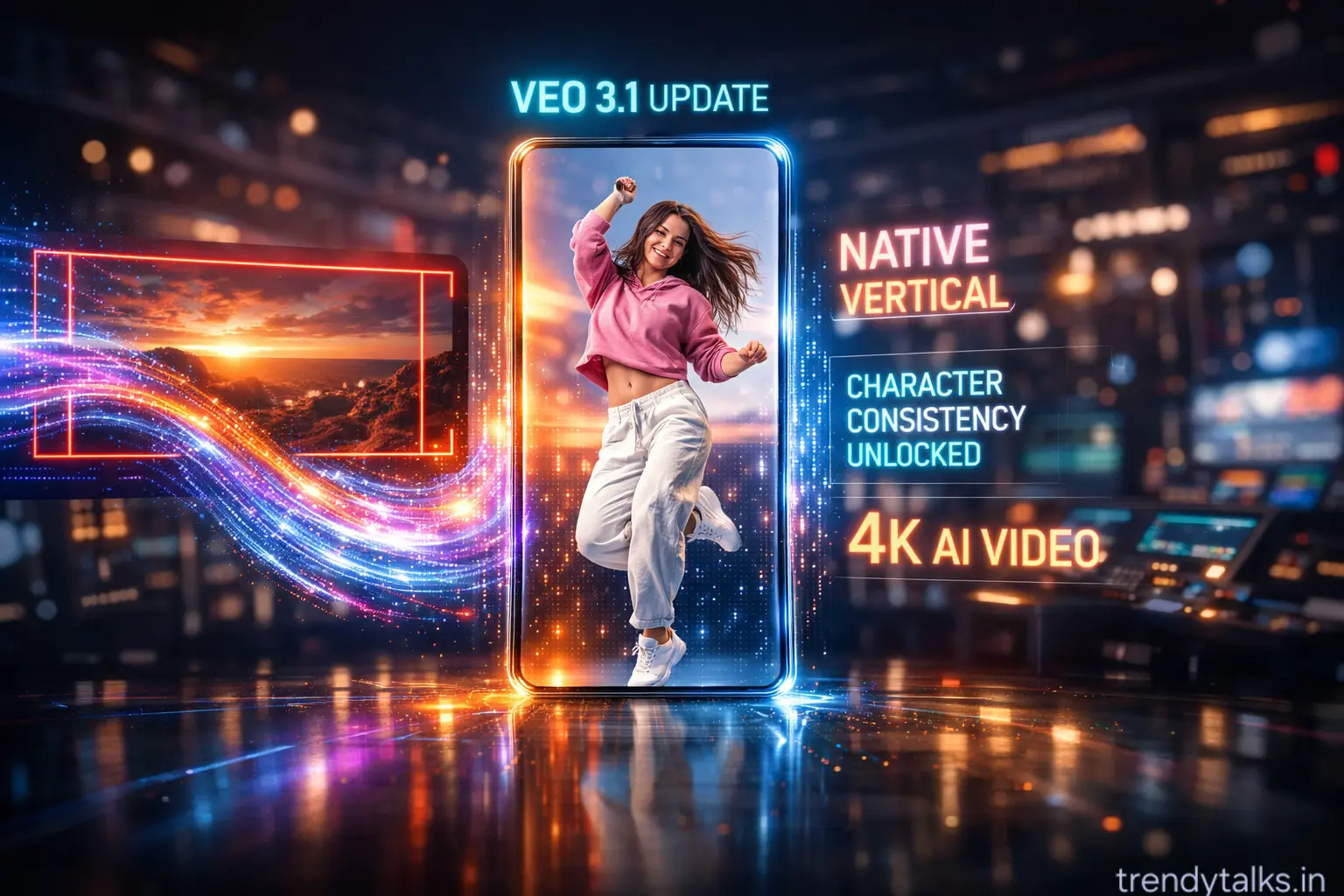
Google’s Veo 3.1 is Here: Why Reels & Shorts Creators Need This Upgrade Now
If you’ve been wrestling with awkward crops on landscape AI videos for your Instagram Reels or YouTube Shorts, your struggle just ended. On January 13, 2026, Google officially began rolling out Veo 3.1, a massive update to its generative video model that pushes AI video from an “experimental toy” to a legitimate professional content tool.
For digital marketers and creators in the fast-paced Indian content ecosystem, Veo 3.1 addresses the two biggest complaints about generative video: inconsistent characters and the lack of mobile-first formatting.
Here is the breakdown of what’s new in Google Veo 3.1 and why it matters for your content strategy.
The Game Changer: Native 9:16 Vertical Video
For the past two years, creating AI video for mobile meant generating a wide landscape shot and then agonizing over cropping it vertically, often losing key parts of the composition.
Veo 3.1 introduces native vertical (9:16) output.
This isn’t just a crop. The AI now understands vertical composition. When you prompt for a vertical video, it frames the subject, background, and action specifically for a phone screen.
Why this matters for Trendsetters:
Zero Wasted Pixels: No more losing half your scene during the edit.
Platform Ready: Generate content that is immediately ready for TikTok, YouTube Shorts, and Instagram Reels without post-production hassling.
Finally, Consistent Characters ("Ingredients to Video")
This is perhaps the most significant update for brand storytelling and PR agencies. Until now, maintaining the same character’s look across different AI-generated clips was nearly impossible.
Veo 3.1 solves this with an enhanced “Ingredients to Video” feature. Users can provide up to three reference images (of a person, a product, or a specific aesthetic location). Veo uses these “ingredients” to ensure consistency throughout the generated video clip.
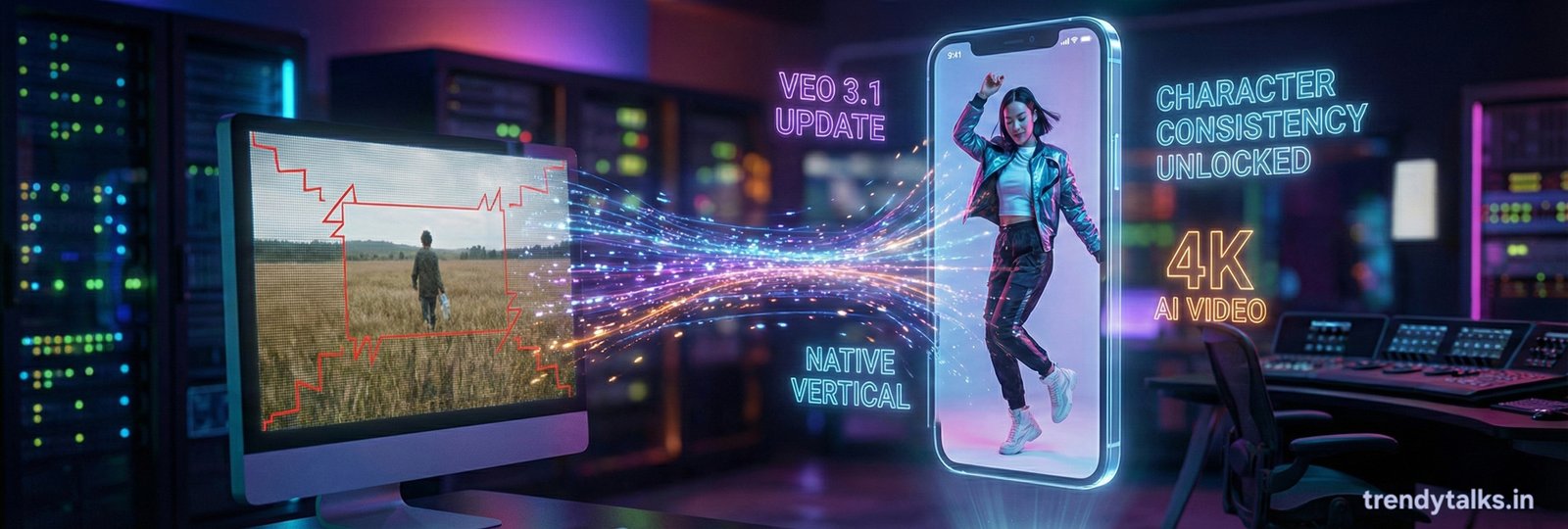
How does Veo keep characters consistent?
Veo 3.1 allows users to upload reference images before generating video. The AI uses these images to “anchor” the visual identity of the subject, ensuring they look the same even if the background or action changes.
Pro-Level Fidelity: 4K Upscaling
Google has significantly boosted the visual engine under the hood. Veo 3.1 can now output in true 1080p and offers 4K upscaling.
For brands, this means AI video can finally move beyond social media fodder and into higher-fidelity placements like website headers, professional presentations, and high-definition digital ads.
Simplified Prompting and Safety
Google claims Veo 3.1 understands human intent better than its predecessors. You no longer need paragraph-long, complex engineering prompts to get cinematic results. Shorter, simpler descriptions now yield higher-quality output.
Furthermore, in an era deepfakes, Google is prioritizing transparency. All Veo 3.1 generations are embedded with SynthID, an imperceptible digital watermark that identifies the content as AI-generated, crucial for brand safety and ethical disclosure.
Quick FAQ: Google Veo 3.1 Update
When was Google Veo 3.1 released?
Google began rolling out the Veo 3.1 update on January 13, 2026.
How can I access Veo 3.1?
Veo 3.1 features are being integrated into the Gemini Advanced app, YouTube Create for mobile creators, and via the Gemini API for developers.
What is the main difference between Veo 2 and Veo 3.1?
The main differences are native support for vertical video (9:16 aspect ratio), improved character consistency through image referencing, and 4K resolution upscaling.
The Veo 3.1 update signals that Google is serious about owning the creator economy workflow. By solving the “vertical problem” and the “consistency problem,” they have removed the biggest friction points for mobile-first creators.
For digital PR professionals, this means faster storyboarding and the ability to create consistent brand mascots or product demos at scale. The race for high-quality, short-form video just got faster—are you ready to keep up?